Biodegradable Trash Services

Biodegradable trash services help communities and businesses manage organic waste through collection, composting support, responsible disposal and landfill diversion. With a focus on service consistency, waste separation, environmental compliance and sustainability outcomes, they support cleaner properties and more responsible waste management.

Green Garbology: Engineering Trash Room Flow to Prevent Risk Before It Starts
Green Garbology
Engineering Trash Room Flow to Prevent Risk Before It Starts
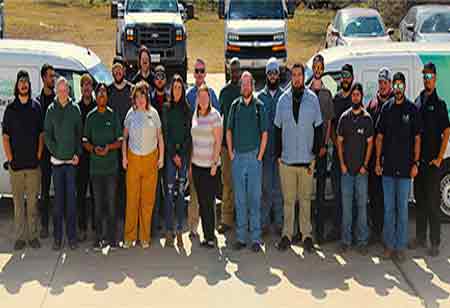
Braedyn Inmon, Owner and Operator
“In many buildings, waste management begins and ends with the selling of equipment or cleaning services. Often missed are how waste moves through a building, where it slows, where it fails and how those failures can lead to odor, pest issues, equipment strain and fire risk,” says Braedyn Inmon, owner and operator of Green Garbology.

Biodegradable Trash Service: Redefining Waste Management through Sustainable Practices

Biodegradable trash services represent a focused shift within the waste management sector, centered on handling organic and compostable materials in ways that align with natural decomposition processes. Rather than treating waste as a uniform stream destined for disposal, these services distinguish between material types, emphasizing the recovery and reintegration of biodegradable matter into ecological cycles.

Rethinking Waste Streams through Biodegradable Service Models

Waste management often gets treated as a reactive service. Something smells, a chute jams, a compactor fails, a trash room becomes a problem and only then does someone step in. That pattern misses a larger issue. In dense residential and mixed-use properties, waste systems are operational infrastructure. When they are poorly designed, badly maintained or treated as an afterthought, they create risks that extend beyond cleanliness into compliance, labor strain, equipment failure and even fire exposure.

The Power of Waste - Maximizing its potential through innovative fuel cell technology
Bloom Energy
The Power of Waste - Maximizing its potential through innovative fuel cell technology
Ivor Castelino, Energy Transition Leader - Biogas and Carbon Capture

Humans generate an incredible amount of waste - nearly 2 billion metric tons a year - and that number is expected to grow by 70 percent by 2050. To make matters worse, two-thirds of human-generated methane emissions come from waste. Methane is a potent greenhouse gas, with 25 times more warming potential than carbon dioxide. Dealing with our waste effectively is critical for the long-term survival of humanity.

Biodegradable Trash Services Info

Q1
What Do Biodegradable Trash Services Do for Properties and Organizations?
Biodegradable trash services help properties, institutions and commercial sites handle waste with cleaning, deodorizing, collection support and material choices that reduce reliance on harsher chemicals or conventional plastic products. Top Biodegradable Trash Services often focus on trash rooms, bins, chutes, shared disposal areas and waste handling routines where odor, residue and resident complaints can build quickly. The work is practical: keep disposal areas cleaner, easier to use and less difficult for staff to monitor between service visits.
Q2
What Solutions Are Usually Included in Biodegradable Trash Services?
Service scope can include biodegradable cleaning agents, odor control, bin washing, chute sanitation, compostable liner guidance, waste-room upkeep and scheduled maintenance. Top Biodegradable Trash Services should also explain what happens before, during and after service, because a missed cleaning cycle can leave staff dealing with pest issues, blocked access and repeated complaints. Strong providers set clear service intervals, match products to the site and document recurring trouble spots.
Q3
Why Is Demand Rising for Biodegradable Trash Services?
Demand is rising because owners, facility teams and communities are under pressure to cut waste impact without making daily trash handling harder. Top Biodegradable Trash Services fit that need when they combine practical site care with lower-impact products, clearer routines and better documentation. Many buildings already struggle with odors, overflow and limited staff time. The category is gaining attention as sustainability goals move from policy statements into the ordinary places where waste is stored, cleaned and removed.
Q4
How Are Top Biodegradable Trash Services Selected?
Top Biodegradable Trash Services are selected by looking at service consistency, product suitability, safety practices, documentation, response time and how well providers understand real waste areas. Decision-makers should walk a provider through a busy trash room or chute area and ask how it would handle odors, residue, spills, blocked access and follow-up after the first visit. A proposal should make service frequency, materials used and accountability easy to compare.
Q5
What Value Do Biodegradable Trash Service Providers Create?
Clean, well-maintained waste areas affect tenant experience, staff workload and property reputation. Top Biodegradable Trash Services create value by reducing avoidable service calls, making trash areas easier to inspect and limiting the use of products that may conflict with sustainability goals. Poor routines can turn a small odor problem into extra labor, complaints and emergency cleaning. For property teams, the value is often seen in fewer recurring issues and clearer expectations for everyone using the disposal area.
Q6
What Role Do Expertise and Technology Play in Biodegradable Waste Handling?
Expertise matters because trash systems vary by building type, volume, layout, ventilation and user behavior. Top Biodegradable Trash Services may use site assessments, service records, product matching, equipment knowledge and scheduling tools to keep waste areas manageable. Technology should support the work rather than add another dashboard people ignore. The best use of tools is simple: track what was serviced, flag patterns and help teams address trouble before it becomes a larger maintenance problem.