Thank you for Subscribing to Environmental Business Review Weekly Brief

FortisBC [TSE: FTS]
Joe Mazza, Vice-President, Energy Supply and Resource Development
Renewable and Low-carbon Gases: A Viable Avenue towards a Cleaner Energy Future
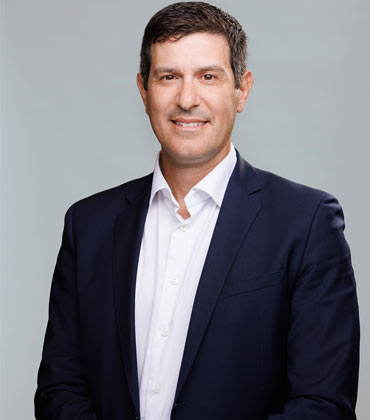
Joe Mazza
FortisBC is a leading energy solutions provider in British Columbia, the westernmost province in Canada. We serve approximately 1.2 million customers with natural gas, electricity, Renewable Natural Gas, propane and innovative energy solutions, through around 56,000 kilometres of energy distribution infrastructure.
British Columbia has historically been among Canada’s most environmentally progressive jurisdictions and FortisBC has been working to meet the expectations of its customers and local government. Offering more sustainable energy solutions has always been a top priority for us and our Clean Growth Pathway lays out clear direction on how FortisBC can contribute towards the provincial government’s CleanBC plan to reduce greenhouse gas emissions. A key part of our Clean Growth Pathway is the expansion of our supply of RNG as well as investing in opportunities to safely integrate other renewable and low-carbon gases in our system, such as hydrogen. Renewable Natural Gas is produced from decomposing organic waste from landfills, agricultural waste, municipal waste and wastewater treatment facilities. The gas from decomposition is captured and cleaned to create RNG. Increased RNG supply will help displace more conventional natural gas and lower our customers’ greenhouse gas emissions overall. Renewable and low-carbon gases are an important cornerstone of a low-carbon economy and can help decrease emissions across the whole value chain. Their use is essential if we are to accelerate the reduction of greenhouse gas emissions in multiple sectors, including buildings, industry and transportation. When we can address greenhouse gas emissions by using energy from a renewable and low-carbon gas supply, we present an affordable and attainable option for our province to decarbonize and combat climate change. To date, we are delivering more RNG than ever. Halfway through 2022, FortisBC increased contracted annual RNG supply more than ten-fold, towards an expected annual delivery of over 10.5 petajoules. That’s almost five per cent of the total natural gas in its system. This is roughly enough energy to meet the natural gas needs of approximately 117,000 homes in BC (according to average annual consumption of 90 gigajoules per year). As we continue to rapidly bring on more supply, the future holds huge decarbonization potential. From studies conducted here in B.C. to those conducted internationally, it’s acknowledged that gas, particularly renewable and low-carbon gas, is key to a lower-carbon energy future and is one of the most expedient ways to affect rapid decarbonization. Gas can help reduce greenhouse gas emissions. Every gigajoule of RNG replaces the equivalent amount of natural gas and keeps more carbon underground while still providing the benefits of a flexible, energy dense gas system.As we continue to rapidly bring on more supply, the future holds huge decarbonization potential.
We have the infrastructure that is bought and paid for and available today to deliver low-carbon energy to homes and businesses. It cannot happen overnight, but the change is happening now and the potential is there.
The articles from these contributors are based on their personal expertise and viewpoints, and do not necessarily reflect the opinions of their employers or affiliated organizations.
