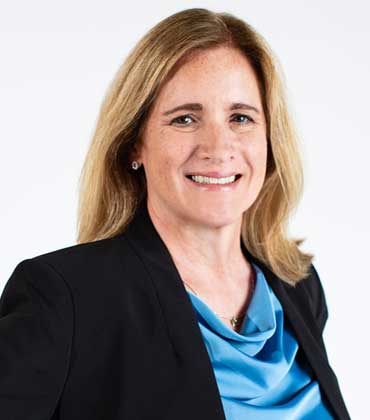
Jennifer Olson-Morzenti
EHS Integration ChampionJennifer Olson-Morzenti serves as vice president of environmental, health and safety (EHS) at J.B. Poindexter & Co. Guided by the belief that EHS is most effective when regulations become part of everyday manufacturing rather than existing as a separate compliance function, she works to integrate safety, environmental stewardship and compliance into daily operations across the company’s approximately 70 manufacturing locations in the U.S. and Canada.
Her leadership in embedding EHS into business operations while strengthening collaboration across a decentralized manufacturing organization has earned Jennifer Olson-Morzenti recognition as EHS Leader of the Year 2026 by Environmental Business Review.
Turning Operational Experience into Better EHS Leadership
My career began in the U.S. Air Force in military public health, where I worked in communicable disease control. Prevention became the foundation of my thinking because I saw how well-designed systems could protect people before problems occurred. After leaving the Air Force, I moved into pharmaceutical manufacturing, taking on responsibilities across safety, quality, facilities, laboratory support, manufacturing and operations. Every role expanded my perspective, but it also confirmed that EHS was where my passion belonged.
Manufacturing and operations became the final piece of the puzzle. For the first time, I experienced the competing priorities operations leaders manage every day, from productivity and quality to customer commitments and financial performance. That perspective changed how I approached EHS. Regulations made far more sense when they fit the realities of manufacturing rather than expecting manufacturing to adapt to them.
Today, I still draw on those lessons. Rather than asking operations to work around compliance requirements, I focus on operationalizing them by building EHS directly into production workflows. Compliance is far more effective when it becomes part of the way work is performed instead of another task added to the day.
Speaking the language of operations has also made me a stronger business partner. Understanding the priorities that matter to manufacturing leaders allows me to connect EHS with operational and financial performance. Those conversations create better collaboration and demonstrate that protecting people, property and the environment supports the business rather than competing with it.
"If I could offer one piece of advice, it would be never to stop learning. I would not redo any major initiative or career decision because I have learned an immense amount from every challenge and every mistake."
Creating Consistency across a Decentralized Organization
Growth through acquisitions has shaped the way we approach EHS at J.B. Poindexter. Today, I support EHS across nine business units and approximately 70 manufacturing locations throughout the U.S. and Canada. Every business comes with its own culture, operating practices and level of EHS maturity, so consistency cannot begin with a standard program. It begins with understanding where each business is today.
Once we have that understanding, EHS becomes part of the company’s broader business integration process. Our corporate EHS team works directly with business leaders and employees to assess maturity, onboard new organizations and implement foundational EHS programs. We also continue strengthening the fundamentals by refining our risk matrices, legal registers, compliance calendars and core EHS programs.
Today, I still draw on those lessons. Rather than asking operations to work around compliance requirements, I focus on operationalizing them by building EHS directly into production workflows.
The way we support those businesses is just as important as the programs themselves. Every business unit has an EHS director who reports to our centralized corporate EHS organization and works closely with our EHS Centers of Excellence. That reporting structure creates consistent communication, shared expectations and standardized processes while still allowing each business to implement those programs in ways that fit its own operational realities.
Not every facility has the same level of EHS resources. Smaller or less profitable locations may not always have dedicated professionals on-site to manage environmental obligations, investigations or training. Active leadership, centralized expertise and regular communication help us maintain consistent standards across the organization regardless of location.
Making Compliance Part of Production
Earlier in my career, I thought about training very differently. My focus was on ensuring the required EHS training was completed according to the compliance calendar, as required by the regulations. It was only after I moved into manufacturing that I realized those decisions affected much more than compliance.
Production schedules are carefully built around customer commitments, turnaround times and daily operations. Pulling employees away for classroom training at the wrong time can disrupt planned work. Seeing those competing priorities firsthand completely changed the way I think about EHS.
Today, I work closely with planning and operations teams, so training supports both regulatory requirements and manufacturing needs. During periods of high production, toolbox talks, one-minute pre-shift lessons, visual management tools and point-of-use procedures help reinforce important safety messages without disrupting production. The same principle applies to environmental compliance. Hazardous waste management, emissions control and health and safety requirements are far more effective when they are integrated into normal operating processes rather than treated as additional responsibilities.
Building Workforce Engagement through Practical Learning
The way people learn has changed, and EHS training needs to change with it. Long PowerPoint presentations and annual classroom sessions are no longer the most effective way to keep people engaged or help them retain information. Our focus has shifted toward shorter, more frequent learning opportunities that fit naturally into the workday.
Hands-on instruction, leader-led coaching, problem-solving exercises and practical scenarios help employees connect safety concepts to the work they perform every day. Rather than asking employees to sit through training once a year, we try to keep EHS visible year-round by making learning more practical, interactive and relevant.
Some of the most effective ideas are also the simplest. Toolbox talks, one-minute pre-shift lessons, visual management tools and even posting safety alerts and training materials in employee restrooms create opportunities for employees to engage with important information throughout the day. Effective training is measured by whether employees understand the why behind the requirements and apply them consistently in their daily work.
Preparing EHS for the Future
One area I continue to focus on is continuous improvement. We monitor regulatory developments, customer expectations and best practices, both within manufacturing and outside our industry, and we work closely with our continuous improvement team to evaluate new tools before integrating them into our operations. That process helps us strengthen our environmental performance while continuing to improve how we operate.
AI is also creating opportunities to improve data analysis, strengthen ergonomic assessments and deliver more engaging training. I see technology as an enabler rather than the objective. Used well, it helps make EHS easier to understand, easier to integrate into daily work and supports better decision-making while keeping our focus where it belongs, protecting people.
None of that happens through EHS alone. We rely on operations, finance, human resources and business leadership to bring different perspectives to the table. Working together allows us to build EHS programs that support compliance, strengthen operational performance and protect our people, property and the environment.
Preparing the Next Generation of EHS Leaders
The role of EHS leaders will continue to expand as workforce expectations evolve, regulations become more complex and new technologies reshape manufacturing. Meeting those expectations requires more than technical expertise. Learning the business beyond EHS and understanding manufacturing, supply chain, finance, and human resources enables EHS professionals to become stronger business partners and to better integrate safety into how organizations operate.
If I could offer one piece of advice, it would be never to stop learning. I would not redo any major initiative or career decision because I have learned an immense amount from every challenge and every mistake. Those experiences have helped me become a better strategic partner and EHS leader, and they continue to shape how I approach environmental, health and safety today.