
Thank you for Subscribing to Environmental Business Review Weekly Brief

Holcim
Jeffrey Giesse, Global Head of Health, Safety & Environment
Making Zero a Daily Practice
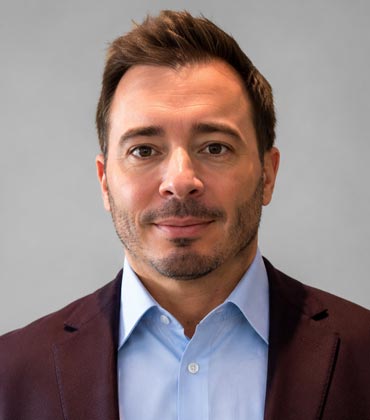
Jeffrey Giesse
Jeffrey Giesse is Global Head of Health, Safety & Environment at Holcim, where he oversees safety and environmental programs across a business that operates in more than 40 markets and employs over 45,000 people. His career has centered on risk reduction, culture building and translating global standards into practical actions at sites where heavy materials, machinery and logistics create constant exposure.
Turning Safety Into a Field Discipline Construction materials manufacturing still carries some of the industry’s most persistent safety risks. Quarries, cement plants and distribution operations depend on physical work that leaves little room for inconsistent practices. For leaders responsible for health and safety, the challenge is not writing policies. It is making sure those policies hold up in hundreds of facilities and thousands of daily decisions. Giesse’s approach has increasingly focused on that gap between policy and execution. He frequently returns to the idea that health and safety do not live in presentations or corporate messaging. They exist in quarries, plants and customer sites where teams make small decisions that accumulate into larger outcomes. That philosophy has shaped Holcim’s “Boots on the Ground” engagement model, which encourages leaders to spend time in the field, improve accountability and create direct conversations around risk. The emphasis is practical rather than symbolic. Presence matters because safety failures often emerge from routine shortcuts that remain invisible to distant management teams. Building Systems That Prevent Serious Incidents Global companies often struggle to maintain consistency in safety performance because different sites mature at different rates. A process that works in one market may be unevenly applied in another. Giesse's approach has been about building systems to minimize such variation. The important risk management system put in place by Holcim in 2021 demands that sites check the controls associated with high-risk activities on a continuous basis. Also, the company has extended its reporting systems and real-time dashboards for enhanced visibility on performance and potential risks. Such systems help to achieve the ambition that Giesse speaks about. He believes that zero harm can be accomplished when companies have combined transparency, technology, and discipline. It is an ambitious statement especially when it comes to the heavy industry. However, it also makes the task of management tangible. Goals only become meaningful when employees feel that they can influence them through their day-to-day performance. Recent results indicate that this discipline leads to certain achievements. In 2021, Holcim announced a 30 percent year-over-year decrease in injury frequency rates for its existing portfolio and 0.36 LTI frequency rate in 2025, where virtually all of its sites achieved zero LTI. Keeping Culture Ahead of Complacency Long periods without incidents can create a different kind of risk. Organizations may begin to assume that existing controls are sufficient and pay less attention to warning signs. Giesse often describes continuous improvement as a safeguard against complacency. Site visits, annual HSE gatherings and recognition programs are designed to keep teams engaged and encourage the exchange of practices between regions. Recognition also serves another purpose. It reinforces the idea that safety performance depends on collective behavior rather than individual compliance. His leadership role requires balancing systems with human behavior. Technology can improve monitoring and reporting, but sustained performance still depends on whether managers remain visible and whether workers feel responsible for one another’s safety. That combination of discipline and engagement has become central to Giesse’s work. For executives responsible for environmental, health and safety functions, his approach offers a reminder that reducing incidents is rarely the result of a single program. It is usually the outcome of persistent attention to culture and a willingness to treat safety as a daily practice rather than an annual objective.The articles from these contributors are based on their personal expertise and viewpoints, and do not necessarily reflect the opinions of their employers or affiliated organizations.
