Thank you for Subscribing to Environmental Business Review Weekly Brief


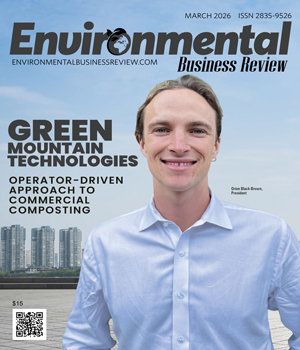
 Orion Black-Brown, President
What operational challenges define modern commercial composting facilities?
Commercial composting operations often face complex site constraints; feedstock variability, regulatory requirements, and community sensitivity all determine whether a facility succeeds or risks operational disruption. Addressing these realities requires technology and support grounded in experience, practical evaluation, and long-term operational support.
Since 1992, Green Mountain Technologies (GMT) has worked with customers to navigate these challenges by designing composting solutions for real-world operating conditions. Organizations turn to GMT for their cutting-edge technology and depth of experience planning, building, and operating composting facilities.
Nearly all of GMT’s work comes through referrals, reflecting an approach in which customer success is inseparable from the company’s own. GMT takes a technology-agnostic approach, guiding customers toward composting solutions that align with their land constraints, operating environment, and budget. Their product line includes aerated static pile (ASP) systems, membrane compost covers, In-vessel composting solutions, and a variety of tractor powered turning equipment.
“At the end of the day we are a mission driven company, focused on removing barriers to composting infrastructure. Our focus is on creating financially and environmentally sustainable composting operations that last for decades, not short-term sales,” says Orion Black-Brown, president.
Built for End-to-End Success
How does GMT integrate consulting and equipment fabrication?
GMT operates through two tightly connected divisions.
The consulting division guides customers through the complex processes required to build and operate a composting facility, from environmental approvals and permitting to site design and contractor coordination. Compost facilities are often regulated as waste management infrastructure, leading to complexities in project citing and environmental approvals. GMT’s award-winning consultants bring decades of hands-on expertise, helping customers successfully navigate these hurdles and design operationally efficient facilities.
Once the facility is designed and permitted, the equipment is made in GMT’s UL certified shop located outside of Seattle Washington. The equipment is meticulously tested at every step of the fabrication process to ensure quality standards are met.
From Site Reality to Long-Term Operational Success
How is technology matched to site-specific composting constraints?
GMT begins by addressing a core challenge: determining which technology fits the realities of a client’s site. The company works closely with operators to assess land availability, geographic conditions, proximity to neighbors, setback requirements such as wetlands and other physical limitations.
-
At the end of the day we are a mission driven company, focused on removing barriers to composting infrastructure. Our focus is on creating financially and environmentally sustainable composting operations that last for decades, not short-term sales.
Based on these factors, GMT identifies the appropriate technology and works with the client to create a preliminary cost model, painting a complete picture prior to committing. They then work with the client’s team to design and permit the compost facility.
After approvals are secured, GMT oversees the implementation of the selected technology through standardized, documented construction processes. They then provide comprehensive operator training, recognizing that building infrastructure and operating it effectively are equally important. Each system includes one year of unlimited support to ensure sustained performance and reliability.
A notable example of GMT’s impact is its work with Grimm’s Fuel in Oregon. The facility had operated a static pile composting system (not aerated) for nearly 30 years, but after 2010, increased waste volumes and nearby residential development led to severe odor complaints, putting the facility at risk of shutdown. Portland Metro, the regional government agency, first engaged GMT to assess the odor issues and recommend mitigation solutions. Following this, Grimm’s Fuel hired GMT to design and provide technology for a covered aerated static pile (ASP) composting system equipped with reversing aeration and biofiltration to optimize odor control. Since making the adjustment, the facility is making better compost and has gone from over 1000 odor complaints to year to less than 1.
What experience anchors GMT’s long-term composting support model?
GMT’s success is anchored in its experienced team. Founder Michael Bryan-Brown helped establish modern composting technology, securing patents and installing hundreds of facilities. Jeff Gage, director of consulting, brings decades of operational expertise, while Rik Langendoen, director of environmental services, adds more than 40 years of project management and regulatory compliance experience.
Guided by a long-standing commitment to composting’s environmental and social value, GMT reinvests 10 percent of its profits back into the industry while focusing on consistent delivery, operational reliability, and long-term customer support.
Selecting Commercial Composting Solutions for Sustainable Waste Management
Commercial composting has moved from niche environmental practice to core infrastructure within environmental and waste management technology. Municipalities, private operators and industrial generators face rising organic waste volumes, tighter odor controls and growing public scrutiny. Disposal costs continue to climb while landfill diversion mandates intensify. Executives responsible for composting investments must therefore weigh more than equipment specifications. They are committing to a long-term processing model that must withstand regulatory oversight, neighborhood pressure and fluctuating feedstock volumes.
Technology fit has become a defining issue. Composting systems range from open windrows to aerated static piles, in-vessel systems and tunnel configurations. Each carries trade-offs in capital cost, footprint, odor management and throughput. A site located near residential development requires a different level of containment and process control than a rural facility with minimal setbacks. Decision-makers who adopt a standardized approach risk overbuilding for simple sites or underinvesting where scrutiny is intense. The most effective solutions begin with a clear assessment of land constraints, regulatory requirements, proximity to neighbors and the operator’s staffing capacity. Systems that match these realities tend to perform consistently and avoid costly retrofits.
Regulatory navigation is equally central. Composting facilities require environmental approvals, engineered design, contractor coordination and ongoing compliance management. The technology itself represents only part of the investment. Permitting delays, design errors or poor installation oversight can erode projected returns. Buyers benefit from partners that understand how facility layout, aeration design and odor mitigation strategies interact with local policy frameworks. Long-term viability depends on thoughtful integration of engineering and compliance rather than equipment procurement alone.
Performance stability over time separates viable operations from those that struggle. Many facilities succeed at construction yet falter in daily management. Odor complaints, uneven material breakdown and inconsistent product quality can jeopardize contracts and community relationships. Sustained operator training and post-installation support are therefore as important as the initial build. An investment that includes structured commissioning, staff education and ongoing technical guidance reduces operational drift and protects reputation. Evidence of measurable improvement in odor reduction and compost consistency offers practical proof that a system is functioning as intended.
Commercial composting also demands adaptability. Waste streams change, urban development expands and contract volumes fluctuate. Facilities that can scale aeration capacity, integrate new control systems or automate monitoring are better positioned to maintain throughput without escalating labor burdens. Advances in data integration and automation are beginning to shape the field, particularly where operators seek tighter process visibility and more consistent output.
Within this landscape, Green Mountain Technologies represents a mature and disciplined option for executives evaluating commercial composting infrastructure. Founded in 1992, it combines a consulting division that guides site assessment, design and permitting with a technology portfolio that includes windrow turners, aerated static pile systems, tunnel systems and the Earth Flow in-vessel composter. Its approach centers on matching technology to site constraints rather than promoting a single format. The firm supports installation oversight, provides structured operator training and includes a year of unlimited post-installation assistance to reinforce performance stability. Documented results, such as major reductions in odor complaints after system upgrades, illustrate its capacity to align engineering decisions with community and regulatory expectations. For organizations seeking composting infrastructure grounded in experience, technical breadth and long-term support, it stands as a considered choice.
...Read more
