Thank you for Subscribing to Environmental Business Review Weekly Brief
Environmental Business Review: Specials Magazine
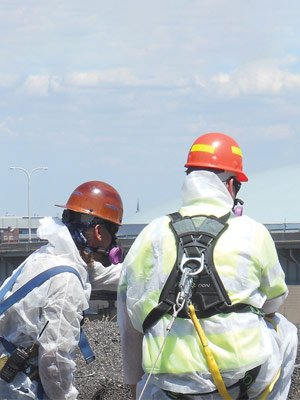
Prior to 1980s, asbestos enjoyed widespread use as a construction material, only to be later identified as a carcinogen. Even today, unfortunately, asbestos-containing building materials (ACBMs) can be traced in the flooring, insulation, roofing, and wall of older buildings. The situation necessitates the legal and safe removal of asbestos from a building, home, or worksite. Mark Cerrone Inc. (MCI), a premier site contracting and construction company, has the capability to lead any asbestos abatement project toward success while aligning with stringent regulatory requirements. Although most of MCI’s projects are centered around the education and school sectors, it has the bandwidth to handle various aspects of abatement, including industrial and historic projects. “Our expertise, tools, and equipment enable us to handle challenging projects known for their logistical complexities and tight schedules, positioning us as the go-to partner for clients that require advanced abatement solutions,” says George Churakos, President at MCI. The company acknowledges that the primary obstacle in this industry lies in the scarcity of experienced and motivated individuals. MCI, however, has been able to assemble a proficient team capable of tackling any challenge head-on. Take its in-house project management team, for instance. Every member embodies a rich blend of professional and field experience—the key to providing unmatched services to clients.
Oil Spill Solutions Provider
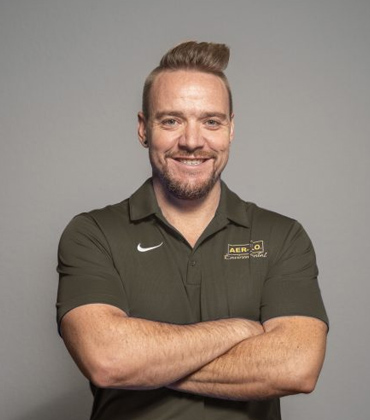
In 2010, BP’s Deepwater Horizon oil platform had drilled a well in the Gulf of Mexico and sealed it with a cement well cap. Disaster struck as a surge of natural gas tore through the installed seal, igniting the oil rig platform and taking the lives of the workers. It left the well with a gaping wound that spewed oil into the gulf for months affecting the shoreline from Florida, all the way to Texas before it got sealed again. The chances of similar disasters have increased with the rising oil demand, spurred by humanity’s development. Human growth can’t be contained, but its impact can be. Containing oil spills requires global effort by companies and industries to bring all hands on deck with their niche capabilities. Aer-Flo Environmental has answered the clarion call to join the effort with its decades of barrier-building expertise. “Aer-Flo Environmental was founded in 1981 as a producer of tarps and covers for the trucking and agriculture industry. We quickly extended into the construction and environmental industrial space from there with our turbidity barriers where we are now the largest manufacturer,” clarifies Ryan Henderson, product specialist at Aer-Flo Environmental. Aer-Flo intends to bring this expertise into the oil spill sector by optimizing its containment and fast deployable barrier tech for oil. It also doubled up its production facility, enhanced with automation to match the substantial demand.
Waste Management Services Provider

Brand image is everything in the waste management space. The age-old notion of associating the industry with old, run-down and dirty garbage trucks, trash containers and disposal companies is changing. kmG Hauling is at forefront of this transformation. It is setting new benchmarks with its wide array of waste and recycling collection and disposal services. The founding principle behind the company is to develop a more strategic and environmentally effective method when dealing with all refuse matters. Founder and president Hugo Garcia capitalized on the knowledge he acquired while working in the family business from the age of 15, learning waste management from the inside out. His focus on innovation and customer service brings a whole new concept and ideology to the space, redefining its perspective in the public eye. The name ‘kmG’ honors the family’s vast legacy in the industry, with the letters ‘k’ and ‘m’ representing the initials of Garcia’s children and ‘G’ denoting the family name. “Our long-standing experience of over two decades and commitment to safety and environmental sustainability across various sectors has made us a prominent entity in the waste management industry,” says Garcia. kmG Hauling extends its services to private, residential and commercial clients, as well as management and brokerage companies. It carries out regular waste collection through scheduled pickups for businesses, ensuring cleanliness and sanitation. Residential clients benefit from regular curbside pickup of household waste and recyclables. It efficiently manages construction and demolition debris in the industrial sector and provides solutions for bulk waste generated by the manufacturing process.
CXO INSIGHTS
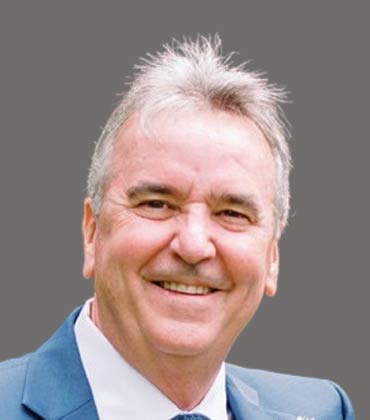
Harnessing Algae: Pioneering a Nature-Based Solution for Sustainable Agriculture
Dan Levy, Vice President -Environment/ National Director, Algae, AECOM

Walking the sustainability walk: The case for EPR
Brian King, EVP, Marketing, Product Management, Advanced Drainage Systems
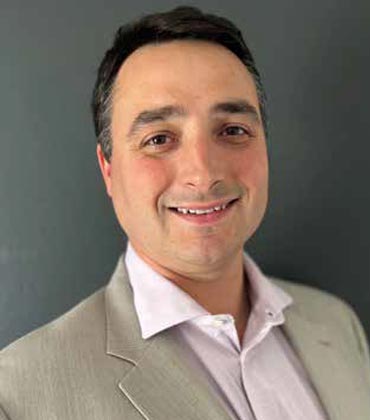
Real Estates Role in Decarbonization: A System Approach
Peter Killeen, Senior Sustainable Operations Manager, JLL
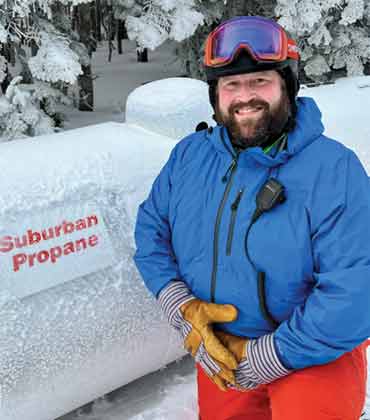
Transforming the Green Tech Industry With Low Carbon Energy
M. Douglas Dagan, Senior Vice President - Renewable Energy, Suburban Propane [NYSE: SPH]

Sustainable Solutions: Partnering with Plastic Beach to Recycle Plastic Film
Joe Hess, MPH, CSP, Sr Director, Facilities and EH&S, Gilead Sciences, Inc [NASDAQ: GILD]
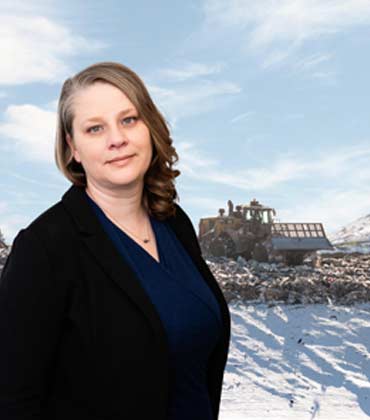
From Landfill To Leadership: Driving Sustainability In The Waste Industry
Amy Davies, P.E., Regional Environmental & Compliance Manager, Casella Waste Systems, Inc
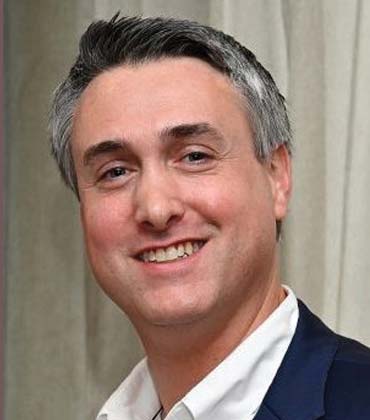
Compensated Fuels: Enabling Energy Transition W/O Breaking The Bank.
Jonathan (J.W.) Hackett, Senior Director, Environmental Products, Global Partners LP [NYSE: GLP]


IN FOCUS
Unlocking the Benefits of Modern Ecological Consulting
Ecological consulting enhances planning, compliance, and sustainable operations for reliable long-term project outcomes.
Fundamental Importance of Natural Resources in Sustaining Life and Development
Natural resources support survival, economic growth, ecological balance, and industrial development, making their sustainable management essential for environmental protection, climate stability, and long-term global progress.
EDITORIAL
Clean Technologies Powering the Future of Environmental Innovation
Clean technologies have stepped out of the shadows of niche innovation to become foundational pillars of modern progress. They are redefining what it means to build sustainable infrastructure, protect public health, and drive industrial decarbonization. Across the United States, a new wave of environmental solution providers is taking center stage, pushing advancements on three critical fronts: carbon credit project development, next-generation wastewater treatment, and highefficiency air purification.
Carbon credit project developers are playing an essential role in helping organizations quantify emissions, implement verified mitigation strategies, and access carbon markets. They facilitate initiatives spanning reforestation, terrestrial carbon sequestration, methane abatement in industrial settings, and the integration of renewable energy sources. As regulatory and voluntary carbon markets expand, these projects are reshaping how sustainability is measured, reported, and valued in corporate and public decision-making.
Meanwhile, innovation in wastewater treatment is transforming how cities and industries manage water. Next-generation systems now leverage membrane bioreactors, anaerobic digestion, and electrochemical oxidation to treat complex waste streams more effectively. These technologies reduce operational costs, recover valuable resources, and enable facilities to meet increasingly stringent discharge standards. For regions facing drought or contamination risks, advanced treatment is no longer optional, it is essential to long-term water security.
At the same time, demand is surging for air purification technologies designed to handle urban pollution, wildfire smoke, and airborne pathogens. American air purifier manufacturers are developing compact, energy-efficient systems equipped with multistage filtration, real-time monitoring, and even AI-based optimization. Whether deployed in homes, hospitals, classrooms, or transit hubs, these technologies are delivering cleaner air where it matters most, supporting both community health and equitable access.
In this edition, we feature insights from Jonathan (J.W.) Hackett, Senior Director, Environmental Product, Global Partners LP and Brian King, EVP, Marketing and Sustainability, Advanced Drainage Systems, for their perspectives on how integrated clean technologies are transforming America’s environmental infrastructure.
Let us know you’re thoughts!
