Thank you for Subscribing to Environmental Business Review Weekly Brief

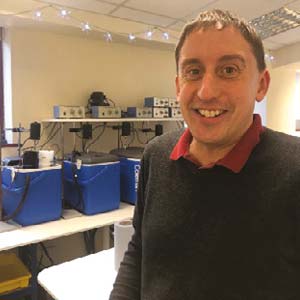 Nathan Lawrence, Founder and CEO, Kay McGuinness, Founder and Director
Founded in 2015, Clinton Marine Survey aims to bring cost effective solutions to the offshore survey industry while ensuring a low carbon footprint. To achieve this, the company offers high quality hydrographic and geophysical surveys for navigation, dredging operations, charting, marine construction and more. The company is based in Gothenburg, Sweden, they own a number of vessels specifically designed for working in extreme shallow to medium water depths down to 500 meters. Clinton Marine Survey operates specialist shallow water survey systems capable of achieving (and in many cases exceeding) the current standards in the offshore industry.
“We own our vessels and software, standardize equipment and bring this together with competence from a team of 60 dedicated employees. As a company, we offer customized solutions for project specific requirements and client needs. We work hard to minimize our carbon footprint by using our Clinton Internet Solution, CIS. CIS has been used for the last 7 years and becomes smarter with each passing day,” prides Martin Wikmar, CEO, Clinton Marine Survey. “We focus on Quality, Health, Safety and the Environment (QHSE) in the most practical sense and use the learnings to become stronger for the future.” The company achieves this objective through a combination of meeting client requirements, needs and expectations together with diligently incorporating internal guidelines, processes and procedure. Clinton Marine Survey’s emphasis on providing a safe and healthy work environment for their employees has won them the international management system for work environment, ISO45001 certificate. Furthermore, Clinton Marine Survey complies with environmental laws and emission regulations and is certified in ISO14001 for environmental management. To demonstrate their commitment to sustainability, they have also become ECO Vadis members.
Ocean pH is an extremely important variable to measure. Monitoring pH is critical for Ocean acidification, coral reefs, coastal marine biology, and environmental monitoring. In harsher applications, such as mining, pH is crucial in helping scientists gauge the effect of wastewater on the environment. For such applications, accurate pH measurement is essential, which in turn, requires innovative pH measuring technology. However, the traditional glass electrode used to measure pH has been around for over a century. Every year, millions of glass electrodes are sold to suit the need for pH measurement in pharmaceuticals, water management, food & beverage, environmental & ocean monitoring. While the glass electrode is the most widely used pH sensor, it has a basic operational flaw: it requires human calibration due to reference electrode drift. The market need was for smaller, more cost-effective, reliable, robust and lightweight sensors that can function autonomously without routine maintenance.
In order to redefine pH sensing, ANB Sensors has developed a low-cost, smart, self-calibrating pH sensor for use across all platforms, including ocean monitoring and water resource management that can be networked to IoT devices and has running costs that are 70 percent lower than existing sensors. “The key feature of ANB Sensors is to make pH sensing systems smarter, more informative, and easier for the end-user,” said Nathan Lawrence, Founder and CEO of the company. If there is an issue with the sensor, the device can seamlessly communicate with operators in real-time and flag the issue to end-users proactively. This functionality sets ANB sensors far ahead in the curve when compared to traditional, single-point systems that offer little to no transparency and connectivity to users.
The key feature of ANB Sensors is to make pH sensing systems smarter, more informative and easier for the end user
ANB Sensors was founded when the company earned the runner-up spot for the Wendy Schmidt ocean health XPRIZE competition. Since then, the company has gone out to secure approximately 1.3 million pounds of funding after their proposal was granted by both the European Union and the UK government. ANB Sensors commercialized their first product towards the end of 2020, and their latest ocean pH sensor is due to be released early this year. To exemplify the competence of ANB Sensors, Kay McGuinness, Founder and COO of the firm, discusses an instance where their sensor overcame a few issues they had with their traditional glass pH sensor. The careful handling of the glass sensor, the calibration and remembering to remove the storage solution bottle before deployment all adds to the complexity of the sensor. With ANB Sensor’s robust, all solid-state sensor, they can ensure that their customers never face issues with equipment breakage again; the sensor can be stored wet or dry, so no more worrying about keeping the sensor in its storage solution, or removing the storage bottle before deployment. Moreover, the client could now deploy their sensors to depths of up to 1000 meters.
With a goal to create many more similar success stories, the company aims to release a miniaturized pH sensor in the first quarter of this year, which will open up further partnerships in the ocean market. “Our challenge at the moment is to educate people that pH is no longer a difficult measurement to take. pH is an important metric and it can now be measured without any hassle,” concludes Lawrence.
Company : ANB Sensors
ManagementNathan Lawrence, Founder and CEO, Kay McGuinness, Founder and Director