
Thank you for Subscribing to Environmental Business Review Weekly Brief
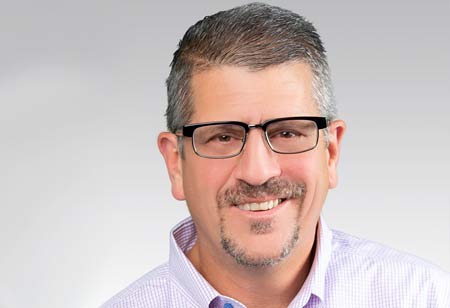
Marty Stern is the Vice President of Global EHS at Colgate-Palmolive, bringing nearly four decades of operational and EHS leadership experience. His work has reshaped how global manufacturers manage risk by shifting the focus from lagging safety metrics to the prevention of serious incidents and enhancement of human performance. By embedding EHS into operational excellence, he has helped set industry benchmarks for resilient and reliable operations worldwide.
AT A GLANCE: • Engineering Risk out of Operations – EHS leadership centered on control hierarchy and substitution to prevent serious harm and environmental impact. • Leadership Alignment as a Safety Multiplier – Executive understanding and accountability embedded into serious injury and fatality prevention systems. • Global Standards with Disciplined Local Execution – Consistent EHS expectations reinforced through audits, verification and sustained corrective action. Recognizing Stern’s leadership in engineering risk out of operations through disciplined control hierarchies and leadership alignment, this article explores how his approach is helping global organizations move from compliance-driven programs to fail-safe EHS performance. Leadership Beyond Compliance: Engineering Risk Out through Disciplined Control Hierarchy Leadership in environmental health and safety has taught me that preventing harm demands more than procedural compliance. Over time, managing risk across global operations has crystallized a fundamental principle: the severity of risk dictates the intensity and architecture of protection required. I begin with engineering solutions but push toward something more decisive, substitution or outright elimination. This conviction has shaped our approach to fall hazards. Rather than accept ladders as inevitable, we’ve invested in platforms, fixed access and portable stairs. Where ladders persist, fall-arrest systems are non-negotiable. The same logic governs noise and respiratory risks. Engineering out the hazard eliminates the dependency on personal protective equipment and the behavioral variability that accompanies it. Working with European suppliers, we’ve redesigned safer tanker access by designing tanker venting and sampling at ground level, removing the need for workers to climb atop the tankers. Environmentally, we’ve moved beyond theoretical containment to rigorous, site-specific validation of capacity and structural integrity, ensuring that any release remains contained without impacting the community or the environment. What matters most is anticipation. We actively seek input from maintenance crews and operators who encounter the system’s edges and gaps daily. Risk evolves, systems degrade and assumptions age poorly. Staying ahead requires constant reevaluation, disciplined workplace observation and the humility to recognize that the next failure mode may already be present; we just have to identify it. Applying Judgment within Frameworks: Leadership Alignment for Fail-Safe Prevention Frameworks establish boundaries, but preventing serious incidents & fatalities (SIFs) requires something less procedural and more deliberate: leadership that understands what’s at stake and acts accordingly. The most consequential shift I’ve witnessed is embedding serious injury and fatality prevention into organizational instinct rather than treating it as a metric to manage. Our supply chain and executive leaders grasp the distinction between controlling risk and merely documenting it. That understanding has been decisive.Engagement scores matter as much as any safety metric. Shop-floor engagement correlates strongly with performance across environmental health and safety, operations and quality. When people feel heard and involved, systems function as intended.

However, if you would like to share the information in this article, you may use the link below:
https://www.environmentalbusinessreviewapac.com/cxoinsight/marty-stern-nwid-1120.html